The Ultimate Guide to Enhancing Comfort: Benefits of Floor Insulation in Logan, Utah
Logan, Utah, is a place of breathtaking beauty, where the Wasatch Range meets the sweeping vistas of Cache Valley. However, any local knows that this beauty comes with a price: some of the most unforgiving winters in the lower 48 states. As temperatures routinely dip into the single digits and the "Logan inversion" settles in, homeowners often find themselves in a constant battle against the chill. While many focus on upgrading windows or adding attic insulation, one of the most overlooked components of a truly energy-efficient home is floor insulation.
In a climate like ours, your floors are often the frontline in the fight against heat loss. Whether you are living in a historic home near Utah State University or a new build in South Logan, understanding the benefits of floor insulation in Logan, Utah can transform your living space from a drafty enclosure into a year-round sanctuary.
Understanding the Logan Climate and Heat Flow
To appreciate why floor insulation is so critical, one must first understand the "triple threat" of heat transfer: conduction, convection, and radiation. In Logan, where the ground can stay frozen for months, conduction is your primary enemy. Heat naturally moves from a warm area to a cold one. If your floors are uninsulated, the warmth you pay dearly for through your furnace is sucked right out through the soles of your feet and into the frozen earth or a frigid crawl space.
Logan falls into a high-demand heating zone. With an average of over 60 inches of snow annually and winter lows that can plummet well below freezing, the thermal gradient between your living room and the area beneath your subfloor is massive. Without a proper thermal barrier, you aren't just losing comfort—you are losing money.
Top 5 Benefits of Insulating Your Floors
1. Significant Energy Savings and Lower Utility Bills
The most immediate impact of installing floor insulation is the reduction in your monthly energy bills. The Environmental Protection Agency (EPA) and various Utah energy analysts suggest that a properly insulated home can save a homeowner between 15% and 20% on heating and cooling costs.
In Logan, where heating systems run at full tilt from October through April, these savings add up quickly. By reducing the workload on your HVAC system, you aren't just saving on gas or electricity; you are also extending the lifespan of your furnace. A system that doesn't have to fight a constant "cold sink" from the floor will cycle less frequently and last years longer.
2. Enhanced Thermal Comfort and the End of "Cold Feet"
We’ve all experienced it: the thermostat says 72°F, but your toes feel like they’re walking on ice. This happens because warm air rises (convection), leaving the coolest air to settle at the floor level. If the floor itself is cold, it creates a "drafty" sensation even if the windows are sealed.
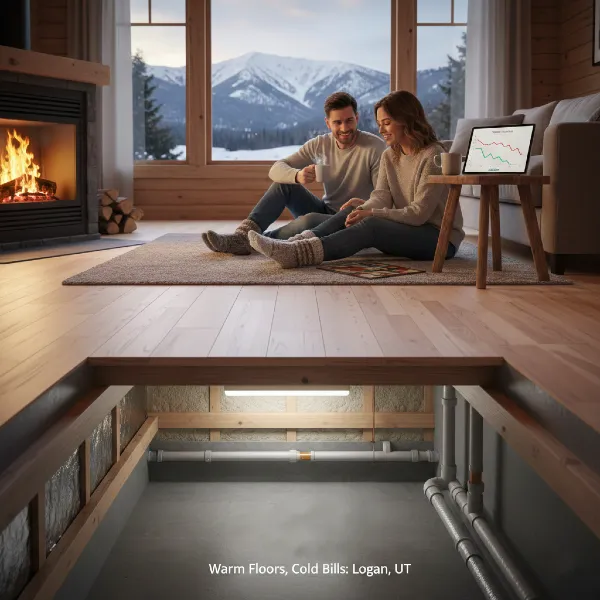
Insulating your floors helps maintain a uniform temperature throughout the room. By raising the surface temperature of your flooring—whether it's hardwood, tile, or carpet—you eliminate those uncomfortable cold spots. This is especially vital for homes built on crawl spaces or raised foundations, where sub-zero Logan winds can whip underneath the house.
3. Moisture Control and Prevention of Mold
Logan’s spring runoff can lead to high moisture levels in the soil. Uninsulated floors, particularly over dirt crawl spaces, are susceptible to moisture migration. When warm indoor air meets a cold, uninsulated floor surface, condensation can form.
Properly installed insulation, especially when paired with a high-quality vapor barrier, prevents this moisture from seeping into your subfloor. This is a critical step in preventing mold growth and wood rot, which can compromise the structural integrity of your home and the health of your family.
4. Pipe Protection in Sub-Zero Temperatures
Many Utah homes house their plumbing in the crawl space or near the foundation. During a Logan cold snap, these pipes are at high risk of freezing and bursting. Adding insulation to the floor and the joist cavities provides an extra layer of protection for your plumbing. It keeps the ambient temperature around the pipes closer to the temperature of your home, acting as a buffer against the external mountain chill.
5. Acoustic Insulation and Noise Reduction
While we often think of insulation in terms of heat, it is also an excellent sound dampener. If you have a multi-story home or a basement apartment, floor insulation significantly reduces the transmission of "footfall" noise and airborne sounds (like the TV or conversation). This creates a quieter, more private environment for every member of the household.
Choosing the Right Material for Cache Valley Homes
Not all insulation is created equal, especially in a semi-arid, high-altitude climate. Depending on your home's construction, you may need a specific type of material to achieve the best results.
Insulation Type Best Use Case Primary Benefit
Fiberglass Batts Joists over crawl spaces Cost-effective, easy install
Spray Foam Rim joists and irregular gaps Provides an airtight seal and high R-value.
Rigid Foam Board Concrete slabs and foundations Moisture resistant, great for coverage.
Mineral Wool High-moisture areas Fire-resistant, excellent at soundproofing.
For many Logan residents, closed-cell spray foam is becoming the gold standard for rim joists (where the house meets the foundation). It seals off the tiny gaps where cold Logan wind "whistles" into the house, providing both a thermal barrier and an air seal.
The Importance of R-Value in Utah
In the world of insulation, the R-value measures the material's resistance to heat flow. The higher the R-value, the better the insulation. For the Logan, Utah area (which sits in Climate Zone 5 or 6 depending on specific elevation), the Department of Energy generally recommends a floor R-value of at least R-25 to R-30.
If your home was built before the 1990s, there is a high probability that your current insulation is underperforming or non-existent. Upgrading to modern standards isn't just a "nice-to-have" luxury; it is a necessary maintenance step for a high-desert climate.
Local Incentives and Rebates
Living in Utah provides some unique advantages when it comes to upgrading your home’s efficiency. Rocky Mountain Power and other local utility providers often offer rebates for homeowners who increase their insulation levels.
Additionally, the Energy Efficient Home Improvement Tax Credit (under the Inflation Reduction Act) may allow you to claim a significant portion of your insulation costs on your federal taxes. Between the lower monthly bills and the upfront rebates, the return on investment for floor insulation in Logan is one of the fastest of any home improvement project.
Professional Installation vs. DIY
While some homeowners in Cache County are quite handy, floor insulation—especially in tight crawl spaces—can be a grueling and technical task. A professional insulation contractor in Logan, UT will have the equipment to ensure there are no gaps or "thermal bridges" that allow heat to escape. They can also perform a professional energy audit to identify exactly where your home is leaking energy.
Furthermore, professionals understand local building codes. In Utah, specific vapor barrier requirements must be met to ensure that your insulation doesn't inadvertently trap moisture against your floor joists, which can lead to expensive repairs down the road.
Conclusion: A Warmer Future for Your Home
Investing in floor insulation in Logan, Utah is about more than just numbers on a utility bill; it’s about the quality of life. It’s about being able to sit in your living room in the middle of January without wearing three layers of socks. It’s about the peace of mind that comes with knowing your pipes won't burst during the next "arctic blast" and that your home is operating as efficiently as possible.
As we look toward another season of snow-capped mountains and crisp valley air, take a moment to consider what’s happening beneath your feet. A small investment today in high-quality insulation will pay dividends in comfort and savings for decades to come.
