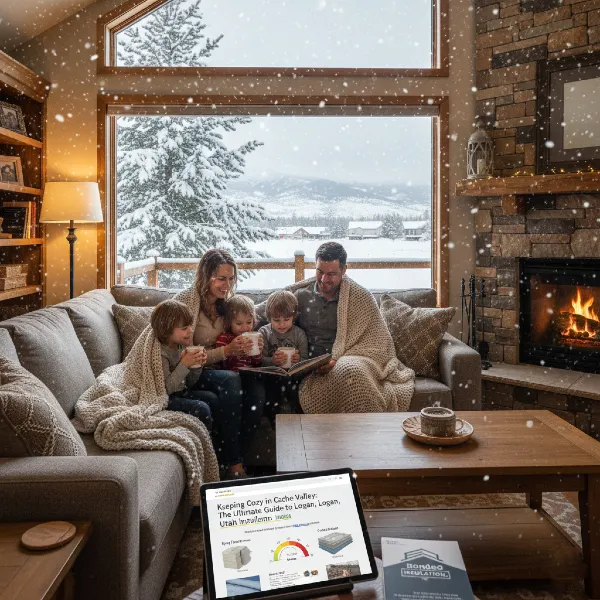
Keeping Cozy in Cache Valley: The Ultimate Guide to Logan, Utah Home Insulation
Logan, Utah – a place where the mountains meet the valley, offering breathtaking views, a vibrant community, and, let's be honest, some seriously chilly winters! If you're a homeowner in Logan, you know that keeping your home warm and energy-efficient isn't just a luxury; it's a necessity. With temperatures often dipping well below freezing and snow blanketing the ground for months, having the right insulation can make all the difference in your comfort and your wallet.
This comprehensive guide will walk you through the best insulation options for Logan, Utah homes, helping you understand the pros and cons of each, where they’re most effective, and what to consider when making your choice. We’ll even touch on how these choices impact homes in beloved Logan neighborhoods like Old Main, College Ward, Providence, River Heights, and North Logan.
Why Logan Homes Need Top-Tier Insulation
Logan's unique climate, characterized by cold, snowy winters and warm, dry summers, demands an insulation strategy that can handle both extremes. While insulation is often thought of as a winter-only defense, it plays a crucial role in preventing heat gain during the summer months too, keeping your home cooler and reducing reliance on air conditioning.
Beyond comfort, proper insulation offers a host of benefits for Logan homeowners:
Significant Energy Savings: This is often the biggest motivator. A well-insulated home requires less energy to heat and cool, leading to lower utility bills. For families in areas like Hyde Park or Millville, these savings can add up quickly over a long Cache Valley winter.
Enhanced Indoor Comfort: No more cold spots near windows or drafty rooms. Good insulation creates a more uniform temperature throughout your home, whether you're in Smithfield or Nibley.
Reduced Noise Pollution: Insulation acts as a sound barrier, muffling exterior noises from busy streets or neighbors. This can be especially appealing in denser areas closer to Utah State University.
Improved Indoor Air Quality: By sealing air leaks, insulation can help prevent pollutants and allergens from entering your home.
Increased Home Value: An energy-efficient home is a more attractive home to potential buyers. Upgrading your insulation is an investment that pays dividends.
Understanding R-Value: Your Insulation's Superpower
Before we dive into specific types of insulation, it's essential to understand "R-value." R-value is a measure of thermal resistance; simply put, it indicates how well insulation can resist heat flow. A higher R-value means better insulating power.
For Logan, Utah’s climate zone, the U.S. Department of Energy generally recommends the following R-values:
Attics: R-38 to R-60 (especially crucial for keeping heat from escaping through the roof in neighborhoods like Providence where older homes might have less insulation).
Exterior Walls: R-13 to R-21
Floors (over unheated spaces): R-25 to R-30
When choosing home insulation for Logan, always aim for the recommended R-values to ensure optimal performance.
The Best Insulation Types for Logan, Utah Homes
Let’s explore the top contenders for insulating your Cache Valley abode.
1. Batt and Roll Insulation (Fiberglass & Mineral Wool)
What it is: The most common and recognizable form of insulation, available in pre-cut batts or long rolls designed to fit snugly between wall studs, ceiling joists, and floor joists. Fiberglass is made from spun glass fibers, while mineral wool is made from basalt, slag, or glass.
Pros for Logan Homes:
Cost-Effective: Generally the most budget-friendly option for insulation installation in Logan.
DIY-Friendly: Relatively easy to install for the average homeowner, though professional installation ensures proper fitting and effectiveness.
Widely Available: Easy to find at local hardware stores.
Good R-Value per Dollar: Provides decent thermal resistance for the cost.
Fire Resistant (Mineral Wool): Mineral wool is naturally fire-resistant, an added safety bonus.
Cons for Logan Homes:
Air Leaks if Not Properly Installed: Gaps and compression can significantly reduce its effectiveness, making professional insulation contractors in Logan a wise choice.
Moisture Sensitive: Can lose effectiveness if it gets wet.
Fiberglass Irritation: Fiberglass fibers can cause skin, eye, and respiratory irritation during installation, requiring proper protective gear.
Best Applications in Logan: Ideal for new construction or accessible open cavities in walls, attics, and floors in homes across Logan, from the newer developments in North Logan to established homes in River Heights.
2. Blown-In/Loose-Fill Insulation (Fiberglass, Cellulose, Mineral Wool)
What it is: This insulation consists of small, loose particles blown into cavities using specialized equipment. Cellulose is made from recycled paper products, treated for fire resistance.
Pros for Logan Homes:
Excellent for Existing Walls & Attics: Can be blown into hard-to-reach areas, including existing wall cavities without requiring extensive demolition, making it perfect for insulating older homes in the Old Main district.
Conforms to Irregular Spaces: Fills all nooks and crannies, reducing air leaks and creating a seamless thermal barrier.
High R-Value (Cellulose): Cellulose often boasts a higher R-value per inch than fiberglass, offering superior thermal performance.
Environmentally Friendly (Cellulose): Made from recycled materials.
Pest Deterrent (Cellulose): Some cellulose treatments include borate, which can deter insects and rodents.
Cons for Logan Homes:
Requires Professional Equipment: Not a typical DIY project; requires specialized blowers.
Dusty Installation: Can be a dusty process.
Settling Over Time: Can settle over many years, potentially reducing its R-value, especially in attics.
Best Applications in Logan: A fantastic choice for upgrading insulation in existing homes in neighborhoods like College Ward or Providence, where walls may be uninsulated or under-insulated. Also excellent for topping up attic insulation.
3. Spray Foam Insulation (Open-Cell & Closed-Cell)
What it is: A liquid foam mixture applied by a professional that expands and hardens, creating a powerful air seal and insulation layer. Open-cell foam is less dense and more flexible, while closed-cell foam is denser and more rigid.
Pros for Logan Homes:
Superior Air Sealing: Creates an incredibly effective air barrier, virtually eliminating drafts and significantly reducing heat loss/gain – crucial for Logan’s extreme temperatures.
High R-Value per Inch: Closed-cell spray foam offers one of the highest R-values per inch, allowing for excellent insulation even in thinner wall cavities.
Moisture Barrier (Closed-Cell): Closed-cell foam can act as a vapor barrier, protecting against moisture intrusion, a benefit for basements or crawl spaces in areas like River Heights.
Adds Structural Rigidity: Closed-cell foam can add a degree of structural integrity to walls.
Long Lifespan: Durable and long-lasting, maintaining its effectiveness for decades.
Cons for Logan Homes:
Higher Cost: Generally the most expensive insulation option upfront.
Requires Professional Installation: Definitely not a DIY project; specialized equipment and training are necessary.
Odor During Installation: Can produce odors during and shortly after installation, requiring proper ventilation.
Irreversible: Once installed, it's very difficult to remove.
Best Applications in Logan: Ideal for new construction or major renovations where homeowners want the absolute best in energy efficiency and air sealing. Excellent for rim joists, crawl spaces, cathedral ceilings, and even entire wall cavities in high-performance homes in North Logan or areas with vaulted ceilings.
4. Rigid Foam Board Insulation (EPS, XPS, Polyiso)
What it is: Insulation made from large, stiff panels of foam (Expanded Polystyrene, Extruded Polystyrene, or Polyisocyanurate).
Pros for Logan Homes:
High R-Value per Inch: Offers good thermal resistance in a relatively thin profile.
Moisture Resistant: Many types are highly resistant to moisture, making them suitable for basements and exterior applications.
Versatile: Can be used in a variety of applications.
Airtight when Sealed: When seams are taped and sealed, rigid foam board provides an excellent air barrier.
Cons for Logan Homes:
More Expensive than Batts/Rolls: Higher material cost.
Labor Intensive for Existing Walls: Not ideal for insulating existing wall cavities without opening them up.
Requires Careful Cutting: Needs precise cuts to fit snugly and avoid gaps.
Best Applications in Logan: Commonly used for insulating exterior walls (under siding), basement walls, crawl spaces, and even some roof applications. Great for adding an extra layer of insulation to the exterior of homes in neighborhoods like Millville or Benson.
Key Areas to Insulate in Your Logan Home
To maximize your energy efficiency in Logan, Utah, focus on these critical areas:
Attic: Heat rises, so a well-insulated attic is paramount for preventing heat loss in winter and heat gain in summer. Aim for the recommended R-38 to R-60. Consider adding an attic hatch cover for extra sealing.
Exterior Walls: If your walls are uninsulated or under-insulated, you're losing a significant amount of heat. Blown-in insulation is often the best solution for existing homes.
Basement Walls: Insulating your basement walls can dramatically improve comfort and reduce energy bills, especially if your basement is finished or semi-finished. Rigid foam board or spray foam are excellent choices here.
Crawl Spaces: Uninsulated crawl spaces can lead to cold floors and moisture issues. Sealing and insulating the perimeter of your crawl space with rigid foam or spray foam is highly effective.
Floors Over Unheated Spaces: If you have living space above an unheated garage or an open crawl space, insulating the floor joists will make a noticeable difference in warmth.
Rim Joists: This often-overlooked area where the foundation meets the frame of your house is a major source of air leaks and heat loss. Spray foam is particularly effective here.
Choosing Your Logan Insulation Partner: Bonded Insulation, Inc.
Selecting the right insulation is a crucial step, but proper installation is equally important. Even the best insulation won't perform optimally if it's installed incorrectly. That's where professional insulation services in Logan come in.
When searching for insulation contractors in Logan, look for a company with:
Local Experience: They understand the specific climate challenges of Cache Valley.
Certifications and Training: Ensures their team is knowledgeable and skilled.
Positive Reviews: Check what other Logan homeowners are saying.
Comprehensive Services: Offering a range of insulation types to meet different needs and budgets.
Commitment to Air Sealing: A true professional knows that air sealing is just as important as the insulation itself.
Here at Bonded Insulation, Inc., we're proud to be a local Logan company dedicated to helping our neighbors achieve comfortable, energy-efficient homes. We understand the nuances of insulating homes from Young Ward to Paradise, and we're committed to providing top-quality materials and expert installation. We specialize in everything from blown-in attic insulation to advanced spray foam solutions, ensuring your home is ready to face whatever Logan weather throws its way.
Final Thoughts: Invest in Your Logan Home's Comfort and Efficiency
Insulating your Logan home is one of the smartest investments you can make. It contributes to your comfort, reduces your carbon footprint, and puts money back in your pocket through lower utility bills. Whether you live in a charming historic home near Utah State University, a family-friendly house in College Ward, or a newer build in North Logan, there's an insulation solution perfectly suited to your needs.
Don't let another Cache Valley winter catch you off guard. Take the proactive step to assess your home's insulation and explore the options available. With the right insulation, you can enjoy a cozy, comfortable, and energy-efficient home for years to come.
Ready to make your Logan home more comfortable and energy-efficient? Contact Bonded Insulation, Inc. today for a consultation and let us help you find the perfect insulation solution!
